How to Bond With Your Guinea Pig: A Complete Guide to Building Trust

The first time I tried bonding with my guinea pig, I picked him up immediately. He squealed, squirmed, and bit me hard enough to draw blood. I dropped him, he ran under the couch, and I did not see him for three days. That was the day I learned that trust with a prey animal does not come easily or quickly.
Building a bond with a guinea pig is different from bonding with a dog or cat. These are animals that evolved to be eaten by everything, and they carry that instinct in everything they do. But after three years and four guinea pigs, I have figured out what works and what absolutely does not. Here is everything I wish someone had told me at the beginning.
Understanding the Prey Animal Mindset
Dogs and cats are predators, even if they are friendly ones. They approach the world with a certain confidence that prey animals simply do not share. Guinea pigs see large moving objects as potential threats, and that includes you for the first several weeks.
This does not mean guinea pigs cannot form deep bonds with humans. They absolutely can, and when they do, the bond is incredibly rewarding. But the path to that bond requires patience that most people underestimate. You are not training a dog to sit; you are convincing a small animal that the giant moving thing in its space is actually safe.
The First Week: Hands Off
When you bring a new guinea pig home, your instinct will be to hold it, pet it, and show it off to everyone. Fight this instinct with everything you have. Your new guinea pig is terrified, in an unfamiliar place, surrounded by strange smells and sounds. The last thing it needs is to be manhandled by a giant.
For the first week, just exist near the cage. Talk softly, move slowly, and let your guinea pig get used to your presence. Do not make sudden movements or loud noises. Leave your hand in the cage occasionally so your guinea pig can sniff you without being picked up. Offer vegetables through the cage bars as peace offerings.
I know this feels anticlimactic. You bought this cute little thing and you want to interact with it. But this week of patience will cut weeks off your total bonding time. Your guinea pig learns that your presence predicts food and safety, not capture and stress.
Getting Them Comfortable With Handling
After the first week, you can start introducing handling. The key is to make the handling experience as non-threatening as possible. Never grab a guinea pig from above; this mimics the way predators attack. Instead, scoop them up gently from below, supporting their entire body with both hands.
Keep initial handling sessions very short, just two or three minutes. Put your guinea pig in your lap while sitting on the floor so that if they squirm free, they do not fall from a height. Have a small towel or blanket ready in case they want to hide. Talk softly the entire time.
If your guinea pig freezes, starts vibrating, or makes nervous noises, put them back immediately. Forcing the interaction when they are stressed will set your progress back days or weeks. Better to end on a neutral note and try again tomorrow.
Hand Feeding: The Secret Weapon
Nothing builds trust faster than food delivered by hand. Start with your guinea pig favorite vegetables and hold them just close enough that the guinea pig has to step onto your hand to reach them. This creates a positive association with your presence and touch.
As your guinea pig becomes more comfortable, you can hold pieces of vegetable while they eat, gradually getting them used to eating from your palm. Some guinea pigs will eventually eat while being held, which is a huge milestone. This means they have decided you are more interesting than their fear.
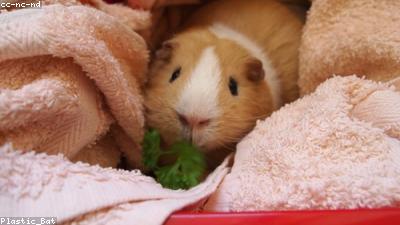
I have found that parsley and cilantro work well for training because most guinea pigs go crazy for them. Small pieces of apple or carrot are high-value treats that can be used for particularly difficult bonding moments. The goal is to make your presence always predict good things.
Floor Time: Building Confidence
Once your guinea pig is comfortable being handled, introduce floor time in a small, safe space. A bathroom or hallway works well. Sit on the floor and let the guinea pig explore you rather than chasing it around. Move slowly and let the guinea pig come to you.
Many guinea pigs are much more confident on the floor than in your hands. They can move away if threatened, which makes them feel safer. Some guinea pigs that were timid in your lap become curious and social on the floor. This is normal and a good sign.
Put out a small plate of vegetables and sit quietly. Your guinea pig will eventually come to associate you with the good things happening around you. The more floor time you can provide, the faster the bonding typically goes.
The Three Guinea Pig Personalities
After living with four guinea pigs, I have identified three distinct personality types that respond to bonding differently.
The bold guinea pig is curious from day one. These are the easy ones who approach your hand quickly and adapt to handling with minimal stress. Give them consistent positive experiences and they will bond with you in weeks rather than months.
The shy but food-motivated guinea pig takes longer but responds well to patience and treats. These are my favorite to work with because the breakthrough moment when they finally trust you feels earned. Keep trying different vegetables until you find their weakness.
The genuinely fearful guinea pig needs weeks or even months of slow, consistent work. Some guinea pigs have had bad experiences with humans before you got them, and you cannot rush that healing. Respect their pace, celebrate tiny progress, and eventually even the most frightened guinea pig can learn to trust.
What Not to Do
Never chase your guinea pig around the cage trying to grab it. This teaches them that your hands mean danger and fear. If you need to get them into a carrier or carrier for vet visits, use a tunnel or hidey house to guide them rather than chasing.
Do not pick up your guinea pig and refuse to put them down when they want to be let go. This teaches them that being held means being trapped. Always put them back when they show signs of stress, even if it feels like you just picked them up.
Avoid sudden loud sounds near your guinea pig. Vacuum cleaners, blenders, and loud music can trigger fear responses. My guinea pigs are completely calm during my workday, but they hide during cleaning time. We have an unspoken agreement about that.
When Bonding Takes Months
Some guinea pigs simply take longer to trust. One of my guinea pigs, Biscuit, took four months before he would willingly come to my hand. I almost gave up on him several times, but I kept showing up, kept offering food, and kept respecting his boundaries.
One day he just changed. He started wheeking when I entered the room. He started coming to the front of the cage to greet me. Now he popcorns when I pick him up and falls asleep in my lap during floor time. That transformation was worth every frustrating day of waiting.
Every guinea pig has a different timeline for trust. Some bond in weeks; others take months. The reward for patience is a genuine connection with an animal that chose to trust you rather than learning to tolerate you. That makes all the effort worth it.

These are all experiences I've gained from keeping guinea pigs, hope they help you~ Feel free to leave a comment if you have questions, I reply to all messages!